Speed vs. Accuracy: How Do You Balance Precision in Vector Search?

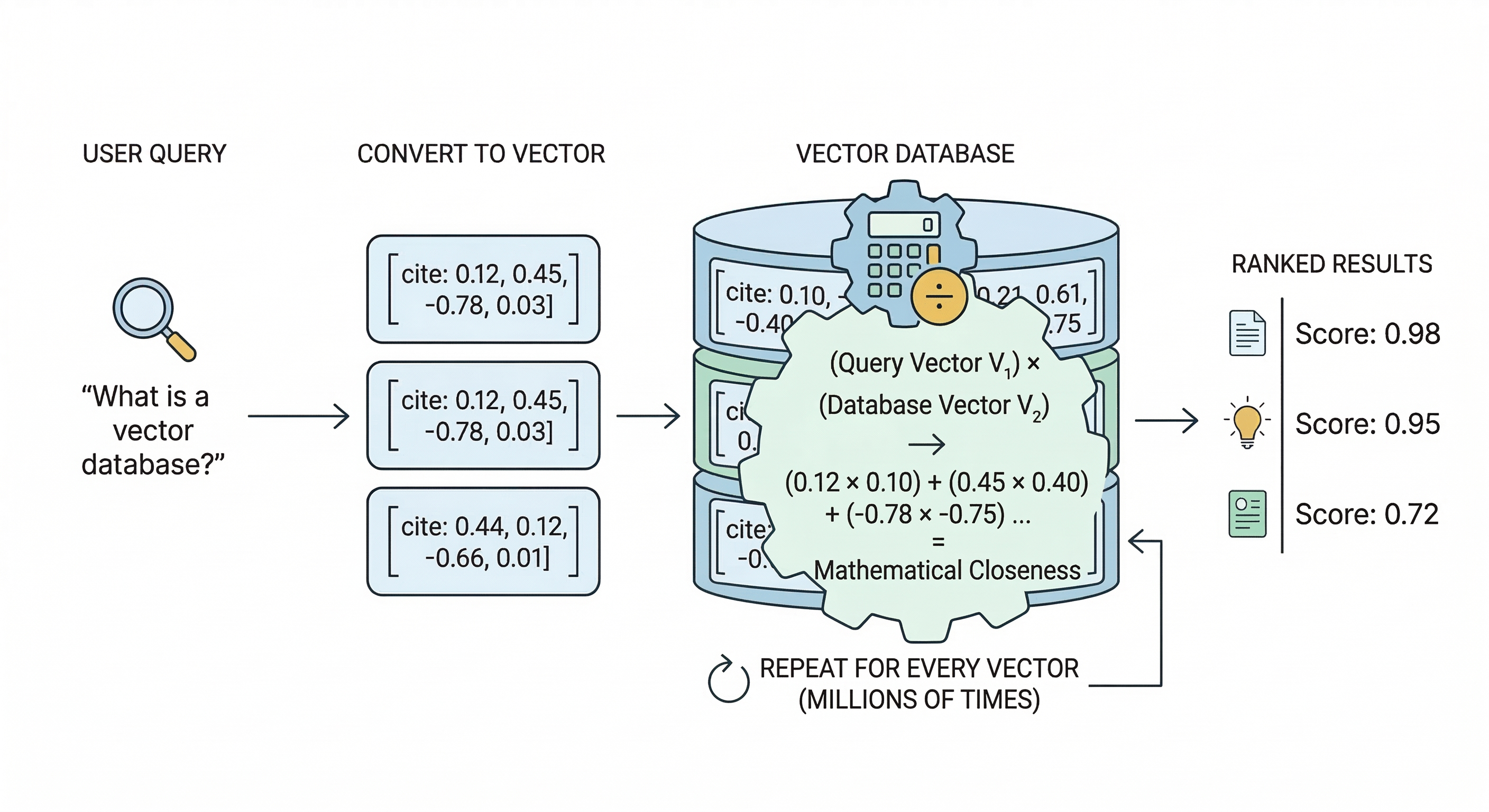
A vector database stores lists of numbers (vectors) that represent meaning - a sentence, an image, a product. Instead of keyword matching, it finds results that are mathematically close to your query. Learn More
Under the hood, every search boils down to:
- Multiply numbers
- Add them up
- Repeat - for every vector, millions of times
At small scale, trivial. At billions of vectors, this math is your product.
What Is Precision?
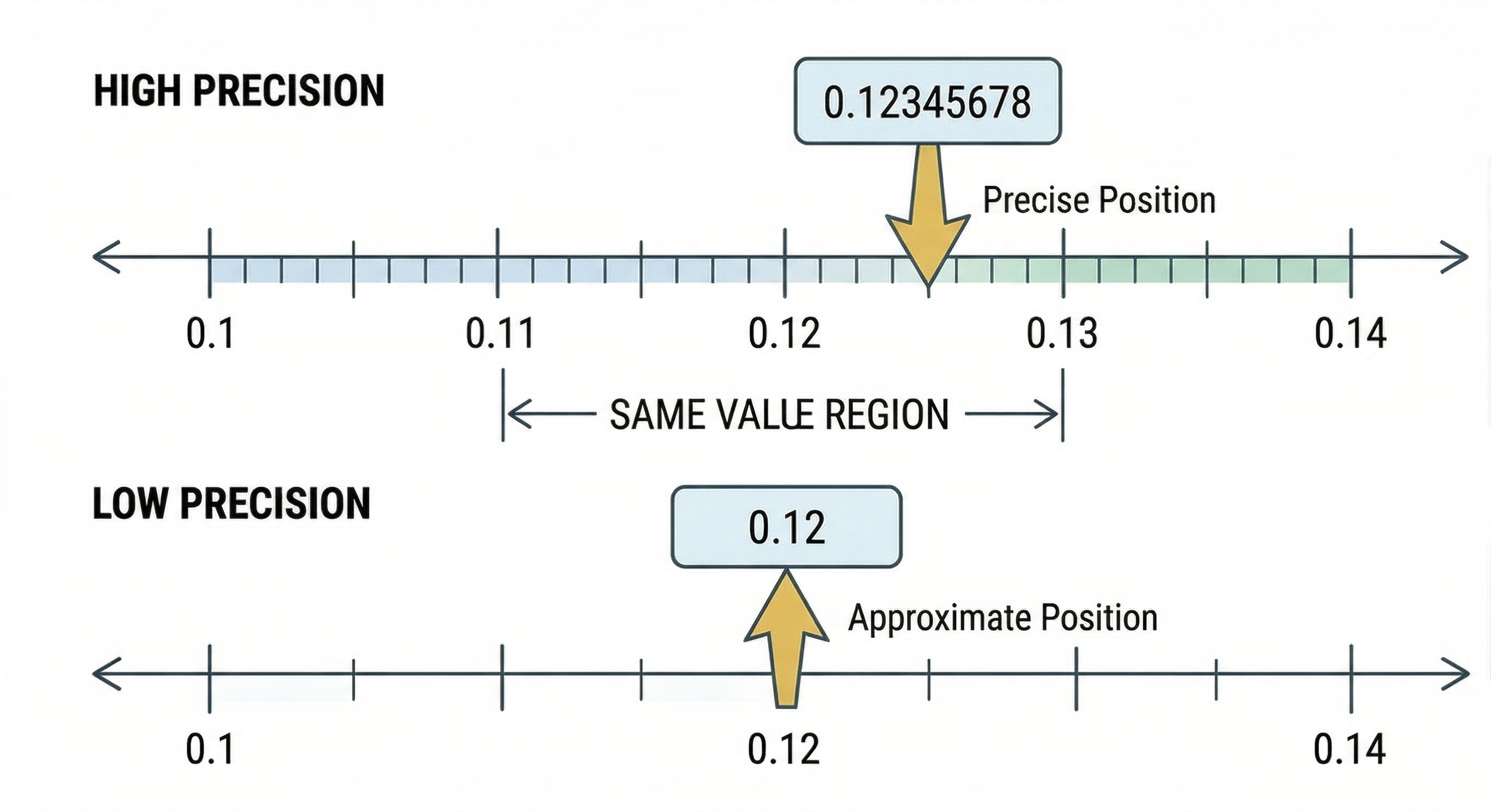
Precision is essentially the number of bits that are used to store each number in a vector.
| Format | Bits | Detail | Memory |
|---|---|---|---|
fp32 | 32 | Highest | Most |
fp16 | 16 | High | Half of fp32 |
int16 | 16 | Near-lossless* | Half of fp32 |
int8 | 8 | Approximate* | Quarter of fp32 |
binary | 1 | Sign only | ~1/32 of fp32 |
*Endee-native formats - more on this below.
Key insight: Precision doesn't change what your vector means. It changes how carefully the math is performed on it.
The Core Trade-off
There's no free lunch. Precision forces a three-way tension:
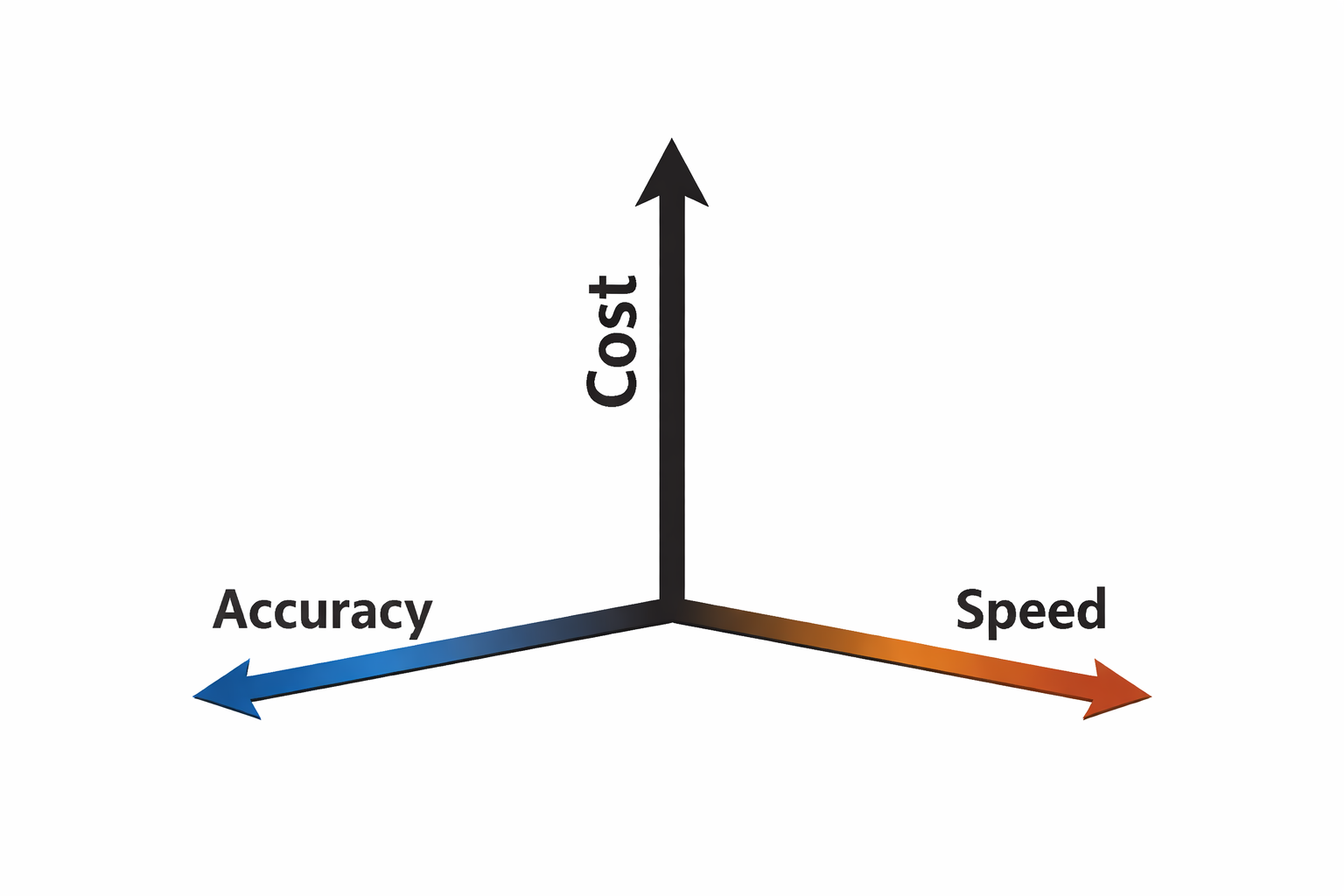
- Higher precision → better recall, slower queries, more memory
- Lower precision → faster queries, cheaper infra, slight accuracy loss
This isn't a technical decision - it's a product decision. The right precision depends on:
- How latency-sensitive your feature is
- How much accuracy loss is acceptable
- How large your dataset is
How Quantization Works
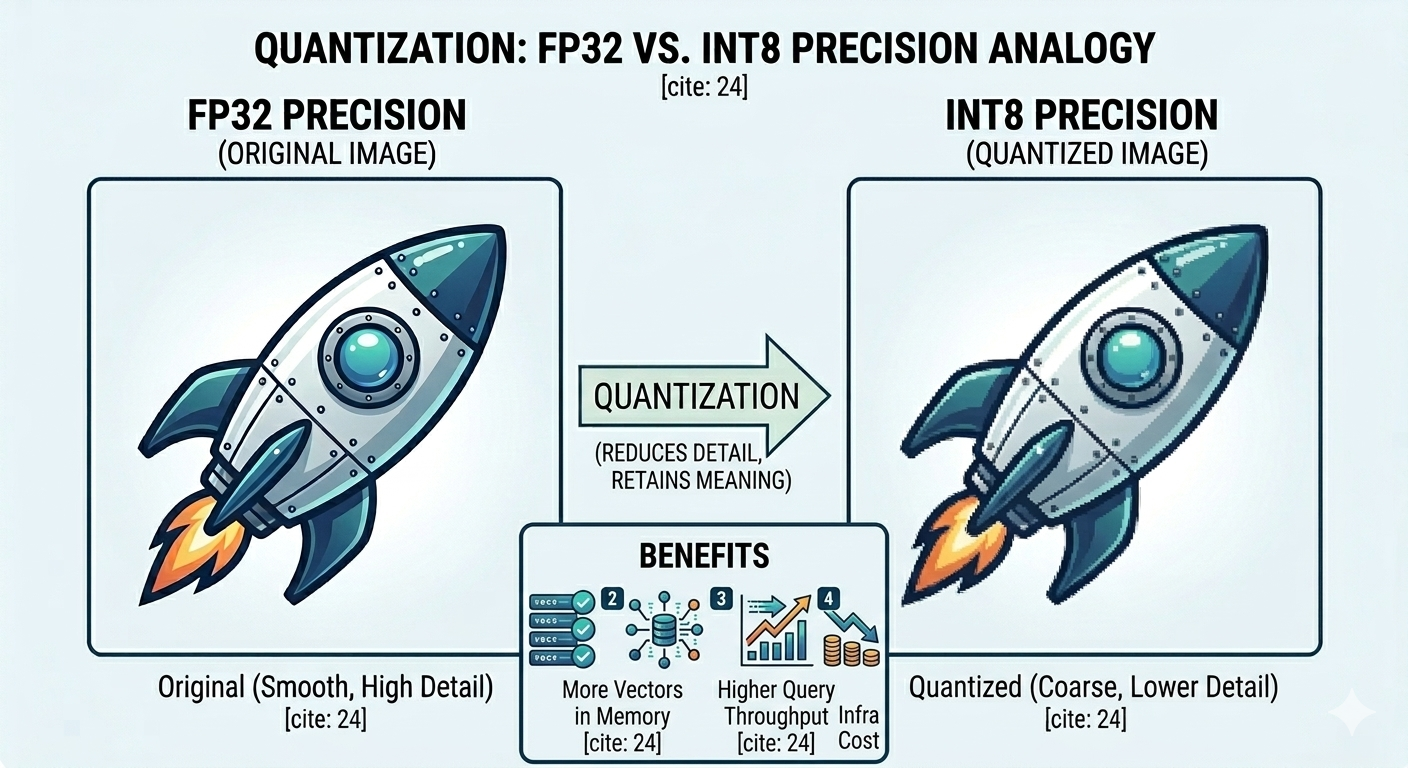
Quantization reduces numerical detail while preserving semantic meaning - like JPEG compression for vectors.
(Note: this is precision quantization, not Product Quantization. PQ splits and clusters vectors. This changes how numbers are stored.)
Benefits:
- More vectors fit in memory
- Better CPU/GPU cache utilization
- Higher query throughput
- Lower infra cost
Endee's Precision Stack
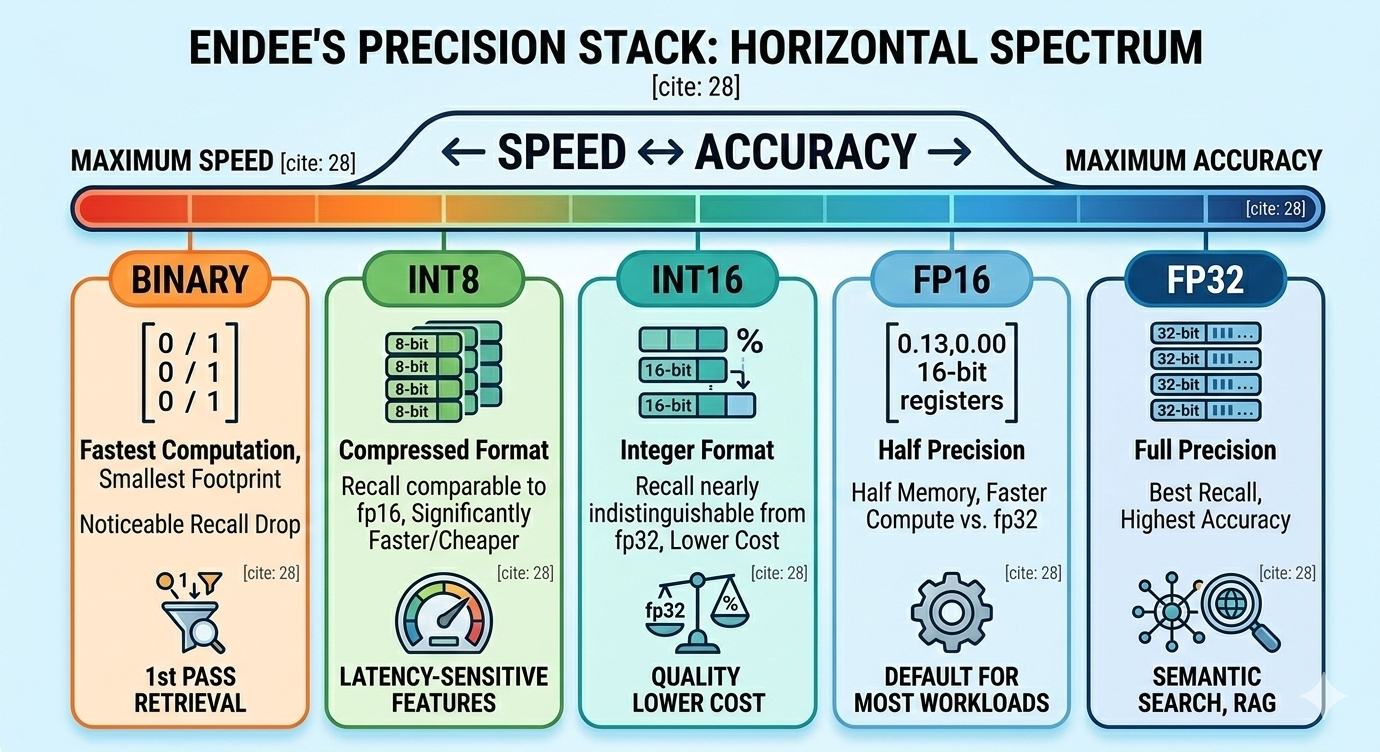
Most databases give you one precision level and call it a day. Endee supports the full spectrum - purpose-built for teams that can't afford one-size-fits-all trade-offs.
fp32 - Full Precision
- Best recall, highest accuracy
- Use when: semantic search, RAG pipelines, knowledge bases
fp16 - Half Precision
- Near-identical recall to fp32 in practice
- Half the memory, faster compute
- Use when: general-purpose default for most workloads
int16 - Endee Integer Format ⚡
- Vectors normalized and scaled to 16-bit integers
- Scale factor stored alongside for magnitude recovery at query time
- Recall nearly indistinguishable from fp32
- Use when: you want fp32 quality at lower cost
int8 - Endee Compressed Format ⚡
- Same approach as int16, compressed to 8-bit
- Recall comparable to fp16, but significantly faster and cheaper
- Use when: high-throughput, latency-sensitive features
binary - Maximum Speed
- Values reduced to sign only (positive/negative)
- Fastest computation, smallest footprint
- Noticeable recall drop
- Use when: first-pass candidate retrieval, approximate filtering
Picking the Right Precision: Real Scenarios
| Use Case | Recommended Format | Why |
|---|---|---|
| RAG / semantic search | fp32, int16 | Accuracy is critical |
| Recommendation feeds | int8, fp16 | Speed + scale matter more |
| Autocomplete / instant search | int8 | Sub-millisecond response needed |
| Bulk analytics / offline jobs | int8, binary | Cost efficiency at scale |
| Candidate retrieval (pre-rerank) | binary | Fast first pass, refine later |
The Bottom Line
Vector databases are math engines. Precision controls how carefully that math runs.
Endee is built around this reality. Rather than locking you into a single precision, Endee lets you dial in exactly where you want to sit on the accuracy–speed–cost spectrum — per index, per feature, per workload.
Precision isn't about math. It's about choosing the right experience for your users — and having the tools to act on that choice.
Want to try Endee's multi-precision vector search? Get started →